Mirna Nadia | 18 September 2026
Paper Title: Who Needs Saving? Reworking Care and Dependency through Mutual Support Network of Janda
Paper Abstract:
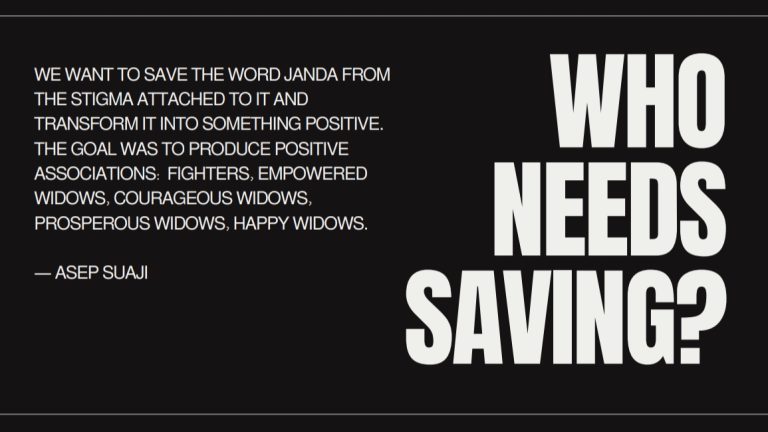
This paper examines how a community of janda (widows and divorcees) in urban Indonesia organizes a mutual support network that challenges dominant assumptions about the heterosexual nuclear family and women’s dependency within it.
Drawing on the experience of members of Save Janda (SJ), a community-based organization led primarily by urban women, this paper explores how they navigate social stigma, economic vulnerability, and legal uncertainty. In Indonesian public discourse, janda are frequently subjected to stigmatization. They are often portrayed as morally suspect or sexually promiscuous, representations that circulate widely in popular culture and everyday social interactions. Such stigmas are closely linked to legal and institutional frameworks governing marriage and family. Many of these women face structural challenges, including limited access to financial resources, exclusion from government assistance programs, and uncertainty surrounding legal documentation such as marriage or divorce certificates. These conditions often place them in precarious economic and legal circumstances. As a community, SJ combines grassroots organizing with an active online presence to challenge dominant narratives about janda, which put them at a disadvantage. Through digital advocacy, collective discussion, and community initiatives, SJ seeks to dismantle stigma while strengthening social and economic support among women and members of the community who share similar experiences. By focusing on the mutual support network developed within SJ, the paper highlights how this community produces alternative forms of knowledge about gender, family, and care. This network not only provides practical resources but also contributes to reshaping public narratives about widowhood and women’s autonomy. In doing so, they challenge dominant ideals of family and gender in contemporary Indonesia and expand future possibilities toward a more inclusive and equitable society that recognizes diverse family structures and gender roles.
Keywords: care, janda, marriage, stigma, widows
This working paper is presented at the AIFIS-MSU 2026
2026 AIFIS-MSU Conference on Indonesian Studies, May 26-30 2026