Save Janda: Who needs saving?
Mirna Nadia | 21 September 2026
In the current political landscape, Save Janda may not be the largest or most politically visible among these initiatives, but their willingness to reclaim the word ‘janda’ distinguishes them from other organisations. Rather than abandoning a word long used to demean them, its members insist on inhabiting it differently. There is politics in that choice. It may not be in the forms of political action we have learned to recognise but it is political, nonetheless. It begins with their refusal to accept the terms through which janda has been made intelligible.
A woman does not become recognisable as a janda simply because her marriage has ended, but because society already possesses a cultural framework and discourse, through which that social fact is interpreted and given meaning. What they confront is not only the stigma associated with the label ‘janda’, but also the moral order that ties respectability to women’s positions within the family. In reclaiming the word – janda – they seek to make possible another way of inhabiting the world, in which lives that appear oblique and strange within the grammar of the nuclear family can also be recognised as lives worth living. They expose the limits of a politics that only grants recognition to women who fit into the ideal of the respectable wife and mother.
If women’s worth continues to be measured by their place within marriage, those whose lives fall outside of it will continue to be seen as failures, lacking, or at best, exceptions. The struggle of Save Janda is not simply the struggle for inclusion. It is for a future world in which women no longer need to be wives or mothers to count as fully human.
Read more about the article →
Save Janda: Who Needs Saving?
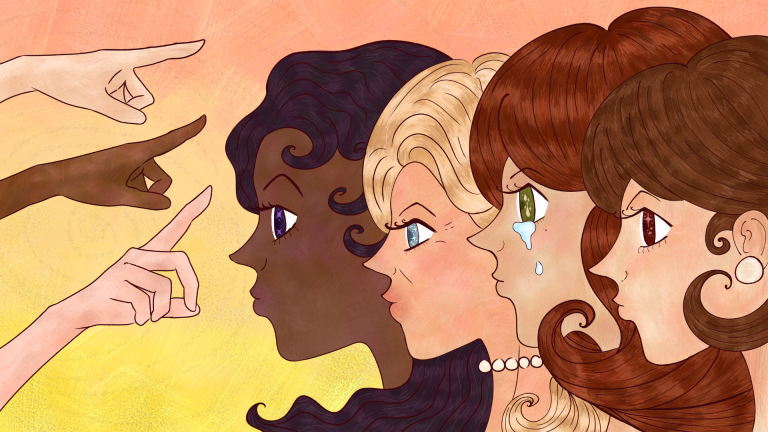
Illustration by Angie Adikarta